Table of Contents Show content
- Video Production and Content Creation: The Strategy That Builds Brands
- Why Video Content Matters More Than Ever
- What Is Video Production?
- 1. Pre-Production
- 2. Production
- 3. Post-Production
- What Is Content Creation?
- Types of Business Videos That Deliver Results
- Brand Story Videos
- Product Videos
- Explainer Videos
- Customer Testimonial Videos
- Social Media Reels
- Corporate Videos
- Benefits of Professional Video Production and Content Creation
- Builds Brand Trust
- Increases Customer Engagement
- Improves Conversion Rates
- Supports SEO Performance
- Strengthens Social Media Presence
- Generates Long-Term Marketing Assets
- Best Practices for Effective Video Content
- Understand the Target Audience
- Write Clear and Concise Scripts
- Capture Attention Within the First Few Seconds
- Maintain Consistent Branding
- Use Professional Audio and Lighting
- Add Subtitles for Accessibility
- Include Clear Calls to Action
- Optimize Videos for Different Platforms
- Monitor Analytics to Improve Future Content
- Publish Content Consistently
- The Future of Video Marketing
- Conclusion
- Frequently Asked Questions (FAQs)
- 1. What is video production and why is it important for businesses?
- 2. How is content creation different from video production?
- 3. What types of videos should businesses create?
- 4. How does video content improve SEO?
- 5. Which social media platforms are best for video marketing?
- 6. How long should a marketing video be?
- 7. What are the essential stages of professional video production?
- 8. Why should businesses invest in professional video production instead of creating videos themselves?
- 9. How can businesses measure the success of their video content?
- 10. What are the latest trends in video production and content creation?
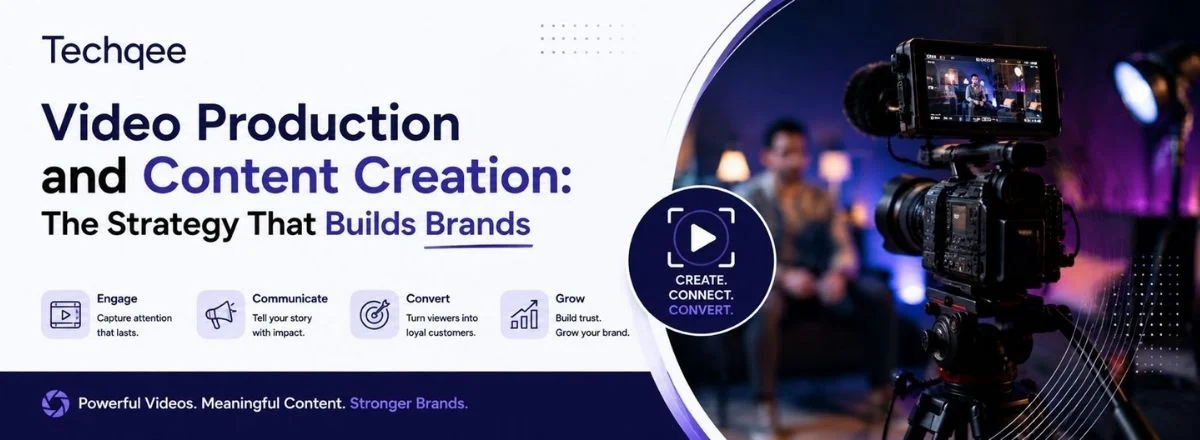
Video Production and Content Creation: The Strategy That Builds Brands
Every day, millions of people watch videos before making a purchase, choosing a service, or learning about a brand. Whether it’s a product demonstration, a customer testimonial, a behind-the-scenes reel, or an educational video, visual content has become one of the most influential forms of digital communication. Businesses that consistently invest in video production and content creation are better positioned to capture attention, build trust, and convert viewers into customers.
Creating videos today is no longer about simply recording footage with a camera. Effective video marketing combines storytelling, planning, creativity, editing, and distribution into a strategy that delivers measurable business results. High-quality content helps brands stand out in crowded markets while giving audiences a reason to engage, share, and remember.
Why Video Content Matters More Than Ever
Modern consumers prefer content that is easy to understand and quick to consume. Videos simplify complex topics, showcase products in action, and create emotional connections that static images and text often cannot achieve.
Businesses use video content for multiple purposes, including:
- Brand awareness
- Product launches
- Customer education
- Social media marketing
- Website engagement
- Employee training
- Event promotion
- Lead generation
Search engines also favor websites that include engaging multimedia. Adding relevant videos can improve user engagement, increase time spent on a page, and support broader SEO efforts.
What Is Video Production?
Video production is the complete process of planning, filming, editing, and publishing professional video content. Every successful video typically follows three major stages.
1. Pre-Production
This stage lays the foundation for a successful project.
It includes:
- Goal setting
- Audience research
- Script writing
- Storyboarding
- Location selection
- Talent coordination
- Production scheduling
Careful planning minimizes production delays and ensures every shot supports the overall objective.
2. Production
Production is the filming phase where creative ideas become reality.
Professional production includes:
- Camera operation
- Lighting setup
- Audio recording
- Drone footage (when required)
- Multiple camera angles
- Direction and scene management
High production quality reflects positively on the credibility of the business.
3. Post-Production
Editing transforms raw footage into polished marketing content.
Post-production typically involves:
- Video editing
- Color correction
- Sound enhancement
- Motion graphics
- Subtitles
- Logo animation
- Background music
- Exporting for multiple platforms
The editing stage often determines how engaging and professional the final video appears.
Why Short-Form Content, Reels & Hooks Are Dominating Digital Marketing in 2026
What Is Content Creation?
Content creation goes beyond making videos. It focuses on producing valuable content that serves a specific purpose while meeting audience expectations.
Content creators develop assets such as:
- Social media reels
- Short-form videos
- Long-form YouTube videos
- Educational content
- Product demonstrations
- Corporate films
- Customer testimonials
- Podcasts
- Infographics
- Blog articles
Successful content creation combines creativity with marketing strategy. Every piece should educate, entertain, inspire, or solve a problem.
Types of Business Videos That Deliver Results
Businesses can use different video formats depending on their objectives.
Brand Story Videos
These videos introduce the company, communicate its mission, and build an emotional connection with potential customers.
Product Videos
Product videos demonstrate features, benefits, and real-life applications, helping customers make informed purchasing decisions.
Explainer Videos
Explainer videos simplify complicated products, software, or services using animation or live-action storytelling.
Customer Testimonial Videos
Satisfied customers sharing genuine experiences create credibility and increase trust among potential buyers.
Social Media Reels
Short-form videos perform exceptionally well on platforms such as Instagram, Facebook, LinkedIn, YouTube Shorts, and TikTok. They capture attention quickly and encourage higher engagement.
Corporate Videos
Businesses use corporate videos for recruitment, investor presentations, internal communication, and company introductions.
Benefits of Professional Video Production and Content Creation
Builds Brand Trust
Professionally produced videos create a strong first impression. High-quality visuals and clear messaging make businesses appear more reliable and established.
Increases Customer Engagement
Videos naturally encourage more likes, comments, shares, and interactions compared to many other content formats.
Let’s move your business forward.
Tell us what you’re working towards. Our team will help you explore the right digital solution.
Improves Conversion Rates
Product demonstrations, testimonials, and educational videos answer customer questions before they arise, making purchasing decisions easier.
Supports SEO Performance
Optimized videos can contribute to improved visibility in search results while encouraging visitors to spend more time on a website.
Strengthens Social Media Presence
Consistent video content keeps brands active across platforms and increases opportunities for audience discovery.
Generates Long-Term Marketing Assets
Unlike temporary advertising campaigns, professionally produced videos can be repurposed for websites, presentations, email campaigns, advertisements, and social media for months or even years.
Best Practices for Effective Video Content
Creating successful videos requires more than attractive visuals. Every video should have a clear purpose, resonate with the intended audience, and encourage meaningful engagement. Here are some best practices that help businesses create impactful video content.
Businesses should focus on:
Consistency is equally important. Publishing valuable content regularly helps maintain audience interest and strengthens brand recognition.
Let’s move your business forward.
Tell us what you’re working towards. Our team will help you explore the right digital solution.
The Future of Video Marketing
Video content continues to evolve as technology advances. Artificial intelligence, personalized recommendations, interactive videos, live streaming, augmented reality, and immersive experiences are transforming how brands communicate with customers.
Short-form videos remain highly effective for discovery, while long-form educational content builds authority and trust. Businesses that combine both formats are likely to reach wider audiences and create stronger customer relationships.
As competition increases across digital platforms, investing in professional video production and strategic content creation is becoming less of a luxury and more of a necessity.
Conclusion
Video production and content creation have become essential components of modern digital marketing. High-quality videos help businesses communicate clearly, build credibility, increase engagement, and generate meaningful results across websites, search engines, and social media platforms. By combining thoughtful planning, creative storytelling, professional production, and consistent publishing, brands can create content that resonates with their audience and supports long-term business growth. Organizations that prioritize video as part of their marketing strategy are better equipped to remain competitive in an increasingly visual digital landscape.
Frequently Asked Questions (FAQs)
1. What is video production and why is it important for businesses?
Video production is the process of planning, filming, editing, and publishing video content for marketing, education, branding, or communication purposes. It is important because videos help businesses explain their products or services more effectively, increase customer engagement, and build trust. High-quality videos can also improve website performance, strengthen brand identity, and generate better marketing results across digital platforms.
2. How is content creation different from video production?
Video production is specifically focused on creating video content, including pre-production, filming, and post-production. Content creation is a broader marketing activity that includes videos, blogs, social media posts, infographics, podcasts, email campaigns, and other digital assets. Video production is one component of a comprehensive content creation strategy designed to attract, educate, and convert audiences.
3. What types of videos should businesses create?
The ideal type of video depends on your business goals and target audience. Popular options include brand story videos, product demonstrations, explainer videos, customer testimonials, corporate videos, educational tutorials, event coverage, behind-the-scenes content, and short-form social media reels. A combination of these formats helps businesses engage customers throughout different stages of the buying journey.
4. How does video content improve SEO?
Video content can improve SEO by increasing the amount of time visitors spend on your website, reducing bounce rates, and encouraging user engagement. Search engines value websites that provide useful multimedia experiences. Optimized videos with relevant titles, descriptions, transcripts, and keywords can also improve visibility in search results and attract additional organic traffic.
5. Which social media platforms are best for video marketing?
Different platforms serve different purposes. Instagram Reels and TikTok are ideal for short, engaging content, while YouTube is excellent for tutorials, product reviews, and educational videos. LinkedIn works well for B2B content, corporate updates, and thought leadership, whereas Facebook supports a mix of promotional, educational, and community-focused videos. Businesses should tailor their videos to suit each platform’s audience and format.
6. How long should a marketing video be?
The ideal video length depends on where it will be published and its objective. Social media videos generally perform well between 15 and 60 seconds, while product demonstrations, webinars, tutorials, and educational videos may range from 2 to 10 minutes. The focus should always be on delivering value rather than meeting a specific duration.
7. What are the essential stages of professional video production?
Professional video production consists of three primary stages. Pre-production includes planning, scripting, storyboarding, and scheduling. Production involves filming using professional cameras, lighting, and audio equipment. Post-production covers editing, color grading, motion graphics, sound design, subtitles, and final optimization for different platforms. Each stage contributes to producing a polished and effective final video.
8. Why should businesses invest in professional video production instead of creating videos themselves?
While smartphones can capture quality footage, professional video production offers superior storytelling, lighting, sound quality, editing, and branding consistency. Experienced production teams understand how to create videos that align with marketing goals and engage viewers effectively. Professionally produced videos also enhance credibility and provide long-term value as reusable marketing assets.
9. How can businesses measure the success of their video content?
Businesses can evaluate video performance by tracking key metrics such as views, watch time, audience retention, engagement rate, click-through rate, shares, comments, lead generation, and conversions. Comparing these metrics with campaign objectives helps identify which types of content perform best and provides insights for improving future video marketing strategies.
10. What are the latest trends in video production and content creation?
Current trends include AI-assisted video editing, personalized video experiences, vertical videos for mobile users, interactive and shoppable videos, live streaming, drone cinematography, 4K production, user-generated content, and short-form video formats like Reels and YouTube Shorts. Businesses that adopt these trends while maintaining high-quality storytelling are better positioned to attract modern audiences and stay ahead of competitors.


